
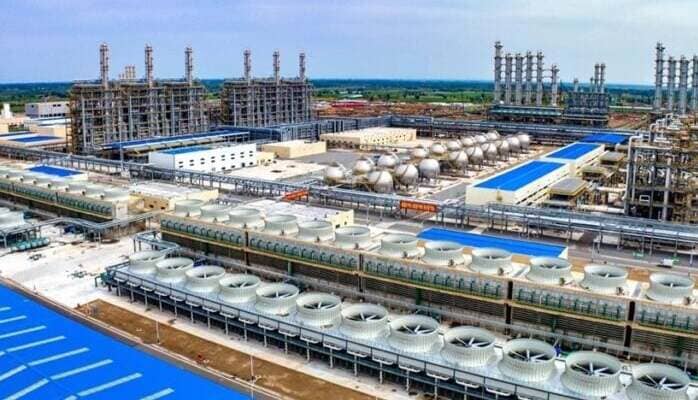
Xinjiang Xinte Energy polysilicon plant Project
5,200 kvar SVG deployment to stabilize reactive power and strengthen distribution reliability
- Industry: Silicon / polysilicon manufacturing
- Primary goal: Dynamic reactive power compensation to stabilize power factor and support power-quality reliability (with harmonic tracking capability)
- Solution deployed: Low-Voltage Static Var Generator (SVG)
- Total capacity: 5,200 kvar (LV dynamic reactive compensation with harmonic suppression)
Project Context:
Xinte Energy operates one of the few globally notable integrated industrial chains linking coal → power → chemicals → polysilicon in a circular-economy model. For silicon and chemical production, continuity and automation are high, and the process environment involves flammable, explosive, and highly corrosive media. In this kind of plant, a sudden power event is not a “stop and restart” inconvenience—it can force extended recovery procedures and create significant economic loss. As a result, the project places unusually strict requirements on power quality and distribution stability—not as a compliance exercise, but as a production safeguard.
In polysilicon and coal-chemical complexes, the power system is typically challenged by fast-changing reactive demand and nonlinear loads across large motor drives and rectification-based equipment. its power-quality issues typically concentrate in two patterns:
-
Reactive power volatility from large motors, compressors, pumps, and impact loads—causing power factor to drift and reactive demand to surge during operating transitions.
-
Nonlinear-load harmonics from drives and rectification-based equipment—often dominated by common odd orders (e.g., 5th and 7th) that accumulate on shared feeders and raise thermal stress.
What makes this project distinct is the combination of continuous high-duty production, high automation, and hazardous media. That raises the bar: the solution must respond quickly, remain stable, and deliver predictable correction without introducing operational complexity.
What we delivered
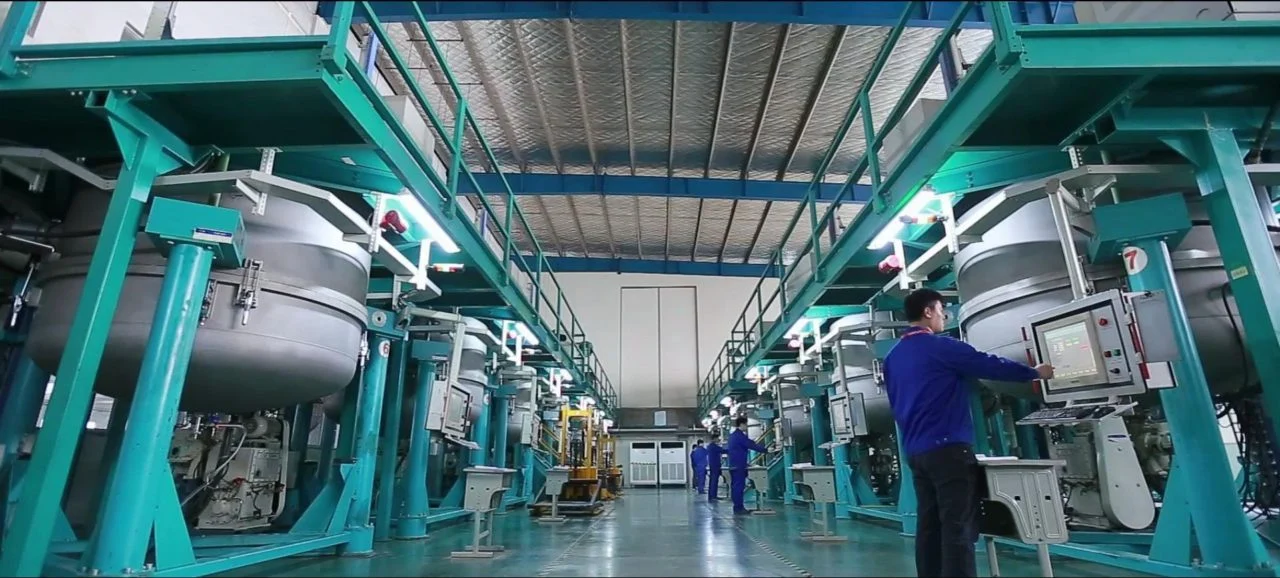
This project deployed 5,200 kvar of low-voltage static var generators. The system was applied primarily for reactive power compensation and power factor improvement, while also providing effective harmonic suppression to reduce distortion stress on the grid-facing side of the distribution system.
How it works:
Low-voltage static var generators (SVG) uses a grid-connected, voltage-source inverter operating in parallel through a reactor. By controlling the inverter output, it can rapidly absorb or generate reactive power, delivering fast dynamic VAR regulation. As an active compensation device, it can track reactive current changes from impact loads and also provide tracking compensation for harmonic currents—helping reduce the harmonic impact on the distribution network.
Why that fit this project’s needs:
-
Fast response to reactive swings to stabilize operating conditions during load transitions
-
Power factor improvement to release capacity margin and reduce distribution stress
-
Harmonic suppression to lower distortion-related heating and nuisance sensitivity in LV equipment
-
Reliability-first operation aligned to continuous, safety-critical production requirements
Results and Benefits
With 5,200 kvar of SVG deployed, the project strengthened power supply quality at the low-voltage distribution level—improving power factor, reducing the impact of reactive swings, and suppressing harmonics that contribute to long-term stress. The practical value for the operator is a more stable electrical baseline that supports safer continuous operation, lower interruption risk, longer electrical asset life, and higher production efficiency—especially important in a process where abnormal power events can trigger costly recovery cycles.
Yout Trusted Power Quality Solutions Provider from China
Enhancing Your Efficiency with Industry-Leading Power Quality Solutions
When power quality is critical, customers look for more than a product—they look for a partner who’s done it many times before. In-Power Electric is one of China’s top three power quality solution providers, with 320+ IP rights (including 90+ invention patents and 50+ software copyrights) and participation in 50+ power quality standards. Our solutions have been deployed across industrial, commercial, infrastructure, and mission-critical environments, working alongside global brands, we help complex facilities achieve stable, compliant, and efficient power systems.

Intel Dalian's Non-Volatile Memory (NVM) ProjectPhase I Expansion

BOE Mianyang G6 AMOLED (Flexible) Production Line Project

Truly (Renshou)'s G5 TFT-LCD High-End Display Production Line Project

Xiamen Hithium Energy Storage Technology Co., Ltd

Huarui Optoelectronics LCD Panel Production Line Project

Canadian Solar (Yangzhou) Manufacturing Base
Shuangliang Silicon Materials (Baotou) Co., Ltd
Tongwei Solar Energy (Anhui) Co., Ltd
JA Solar Baotou Manufacturing Base Project

Tongren Hanergy Mobile Energy Manufacturing Base

Xinte Energy Xinjiang Polysilicon Manufacturing Base

YMTC 3D NAND Chip Manufacturing Base

CETC Monocrystalline silicon manufacturing base

China Resources Snow Beer Nanjing Manufacturing Plant Project

WUDELI Flour Mill Group Co., Ltd
Inner Mongolia Yijiahao Cheese Co., Ltd

CNPC Jichai POWER Company Limited

CNPC Soralchin Adrar Refinery
Let's talk about your project
Contact us to discuss your loads, harmonic profile, and reliability requirements. We’ll recommend a practical active filtering approach that fits your electrical system.