
Qingdao Metro Oceantec Valley Line
Hybrid Dynamic Filter Compensation System deployed at scale to protect rail-grade power reliability
- Industry: Urban rail / metro
- Line scale: 58.35 km, 22 stations (primarily elevated)
- Rolling stock: 4-car B-type trains (max 120 km/h)
- Solution deployed: 70 sets of Hybrid Dynamic Filter Compensation Cabinets
Project Context:
Qingdao’s Oceantec Valley Line entered passenger service on April 23, 2018. It spans 58.35 km with 22 stations and operates four-car B-type trains at up to 120 km/h—one of China’s highest metro design speeds. By May 2023, the line had carried 112 million cumulative passengers, with peak daily ridership reaching 111,800.
After multiple rounds of bidding and technical evaluation, the project adopted a Hybrid Dynamic Filter Compensation System, deploying 70 sets of our hybrid dynamic filter compensation cabinets.
Why power quality matters here
On a long, high-speed metro corridor like this, power quality isn’t a “nice-to-have”—it directly affects service continuity, maintenance pressure, and lifecycle cost. A severe harmonic environment can quietly push the system toward higher stress, and when conditions line up, it can surface loudly as operational incidents.
For the operator, the risks are practical and consequential:
-
Service disruption risk: Harmonic-driven instability can trigger nuisance alarms, protection events, and equipment resets—exactly the kind of issues that can create delays or partial service impacts when the line is under load and recovery time is limited.
-
Asset stress that compounds: Persistent distortion increases heating and electrical stress on transformers, cables, and switchgear—often showing up later as repeat troubleshooting, premature failures, and higher replacement frequency.
-
Maintenance-window pressure: Metro systems live on tight night windows. When power quality becomes unstable, the operator pays in corrective work, overtime labor, and reduced predictability in maintenance planning.
Our Solutions:
This project was evaluated as a severe harmonic environment typical of rail applications, where traction and auxiliary systems introduce persistent distortion and operating states shift throughout the day. In practical terms, that means the power supply system must handle:
-
Persistent harmonic distortion across the supply network, creating thermal and electrical stress on feeders and distribution equipment.
-
Load-driven variability as operating conditions shift, which can expose instability and trigger nuisance alarms or protection activity.
-
Interaction risks in rail power systems, where compensation and filtering must be applied in a controlled way to avoid secondary problems (such as resonance sensitivity) as the network and loads change.
What we delivered — why a hybrid architecture fit this project
In rail transit, the goal isn’t simply “add filtering.” It’s to establish a stable, repeatable power-quality baseline across changing operating conditions—without introducing new sensitivities as the network behaves differently at different times.
That’s why the winning approach here was a Hybrid Dynamic Filter Compensation System using LSVG cabinets. In severe harmonic rail environments—especially when deployed at scale (70 installations)—hybrid architectures are often the most practical path to robust results: they combine strong harmonic handling with dynamic correction, so performance remains stable across real operating transitions rather than being optimized for a narrow operating point.
Results and Benefits
With the hybrid system deployed across the line, the operator gained a more stable power-quality baseline under a demanding duty cycle—helping reduce distortion-driven stress that accumulates into maintenance work and lowering the likelihood of nuisance events that can become service-impact problems as operating conditions change.
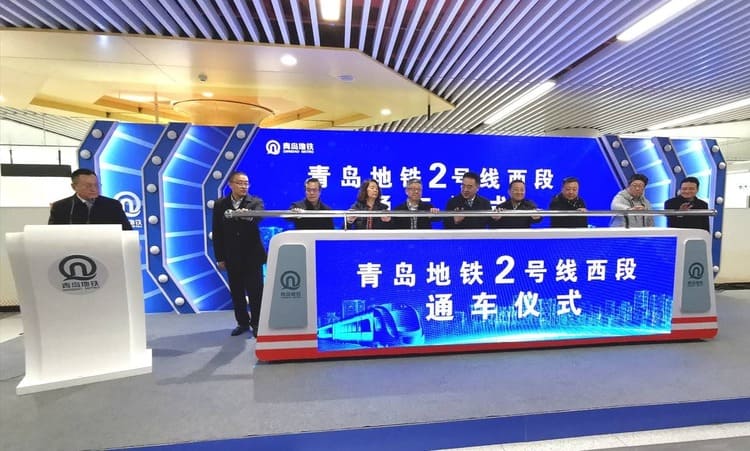
Trusted by Metro Operators
By end-2025, we had delivered comprehensive power-quality solutions for 129 urban metro lines across China—about 47.1% market share.
We combine advanced power electronics, control algorithms, and field-proven reliability to reduce electrical stress, lower maintenance friction, and protect operational continuity. Below are selected metro operators and lines where our solutions are in service.














Let's talk about your project
Contact us to discuss your loads, harmonic profile, and reliability requirements. We’ll recommend a practical active filtering approach that fits your electrical system.