
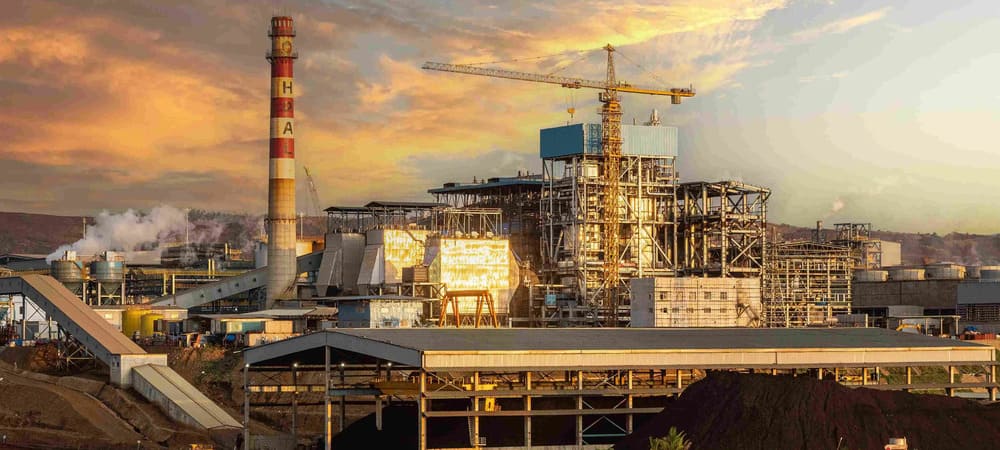
Indonesia’s OBI Nickel–Cobalt Processing Plant Project
A dynamic compensation solution that smooths voltage when the load gets rough, cuts distortion, and supports reactive balance so the plant runs steadier and safer.
- Location: OBI Island, North Maluku, Indonesia
- Industry: Nickel-cobalt hydrometallurgy (HPAL) + high-power metallurgical smelting systems
- Planned output: ~240,000 t/y nickel–cobalt intermediate products
- Solution: Hybrid Dynamic Filter Compensation System (filter + dynamic compensation)
Project Context:
The OBI industrial zone in North Maluku has become one of Indonesia’s most strategically important nickel processing hubs, tied to global supply chains for batteries and advanced materials. This is a large-scale industrial project built around laterite nickel resources and hydrometallurgical processing (HPAL), with supporting infrastructure typical of modern nickel industrial parks.
In metallurgical plants—especially where arc furnaces and heavy rectification loads are present—power quality issues don’t stay “electrical.” They quickly become production risk:
-
Unplanned downtime risk: sudden voltage instability and unbalance can trigger nuisance trips, force restarts, and interrupt smelting rhythm.
-
Equipment stress and accelerated wear: repeated high-current events and harmonic heating raise thermal stress in transformers and upstream distribution gear—often showing up later as overheating, insulation aging, and higher failure probability.
-
Quality and throughput pressure: unstable power makes processes harder to control. When the plant is running at high load, small disturbances can expand into larger operational disruptions and cost.
Metallurgical electric arc furnace (EAF) systems are classic non-linear, highly dynamic loads. Their electrical behavior changes across the three main stages—melting, oxidation, reduction—with the melting phase typically creating the most severe disturbances.
-
Nonlinear, harmonic-rich load: arc furnaces and rectifier-driven equipment distort current waveforms and generate harmonics dominated by odd orders (5th, 7th, 11th, 13th)—the set most often associated with heating and distortion propagation in industrial networks.
-
Large transformer capacity and heavy draw: furnace transformers commonly sit in the multi-MVA to tens-of-MVA class, so even short events create system-wide disturbance potential.
-
Violent load swings by operating phase: during the melting stage, power demand peaks—and the frequency of short-circuit events rises due to arc initiation and charge collapse. The result is rapid, irregular current fluctuation, three-phase imbalance, and visible voltage instability.
-
Flicker and instability sensitivity: the combination of fast swings and repeated events produces flicker-like behavior that impacts both production operation and upstream network stability.
This is why “static filtering only” often falls short in arc-furnace environments—the challenge is not just harmonics, but dynamic instability.
What we delivered
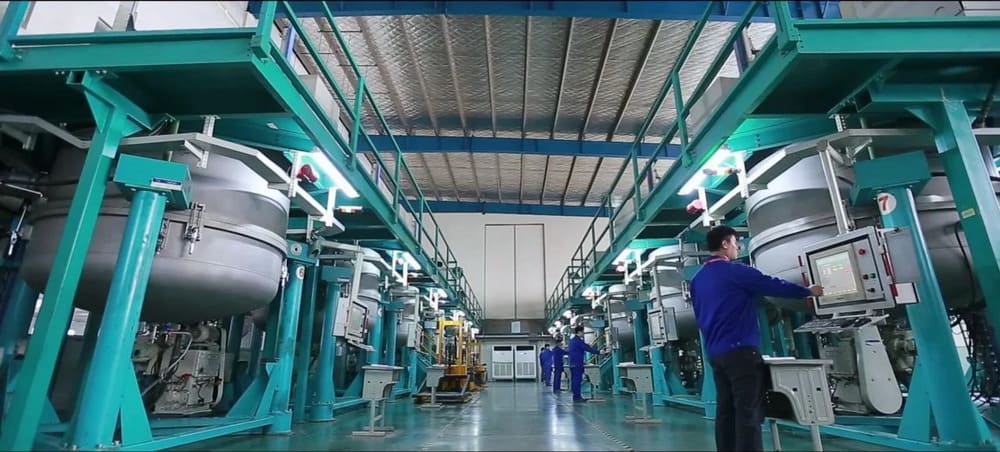
This project’s environment is particularly demanding because these effects occur under high power consumption, with furnace transformers commonly ranging from several MVA to tens of MVA, and under operating conditions where stability and uptime directly drive project economics.
So, this project required a solution that could do two things at once: clean up distortion and hold the bus stable while the load behaves unpredictably. Our Hybrid Dynamic Filter Compensation System was selected and configured to meet that reality, which can aligned to the actual behavior of arc-furnace-driven loads:
-
Dynamic voltage stabilization under rapid load swings
Our solution responds to fast current fluctuations and disturbance events, helping reduce flicker and stabilize operating conditions during high-intensity phases such as melting. -
Harmonic filtering to reduce distortion-driven stress
By actively reducing harmonic content on the network, our product can help lower heating and electrical stress on transformers, feeders, and low-voltage distribution equipment—supporting more reliable long-term operation. -
Reactive power compensation to recover capacity and improve efficiency
When reactive demand swings, our product will provide compensation to keep power factor healthier, reduce losses, and free up usable capacity during peak furnace demand. -
Support for unbalanced and irregular operating states
Metallurgical systems frequently experience three-phase imbalance during short-circuit events and unstable arc conditions. Our product is designed to operate under these non-ideal conditions to help reduce their downstream impact. -
Operational simplicity for heavy-industry sites
The system is deployed to run continuously with straightforward operation and maintenance routines—because in large metallurgical projects, “manageable on site” is part of performance.
Results and Benefits
With our system deployed, the operator (PT Halmahera Persada Lygend) gains a more stable power-quality baseline in a demanding metallurgical environment: fewer disturbance-driven interruptions, lower distortion stress on critical assets, improved usable capacity under peak load, and reduced maintenance friction. In practical terms, this supports steadier production, lower operating losses, and measurable economic benefits over continuous operation—especially during the most disruptive furnace phases.
Yout Trusted Power Quality Solutions Provider from China
Enhancing Your Efficiency with Industry-Leading Power Quality Solutions
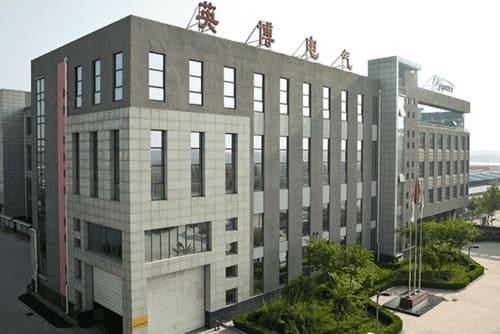
When power quality is critical, customers look for more than a product—they look for a partner who’s done it many times before. In-Power Electric is one of China’s top three power quality solution providers, with 320+ IP rights (including 90+ invention patents and 50+ software copyrights) and participation in 50+ power quality standards. Our solutions have been deployed across industrial, commercial, infrastructure, and mission-critical environments, working alongside global brands, we help complex facilities achieve stable, compliant, and efficient power systems.

Intel Dalian's Non-Volatile Memory (NVM) ProjectPhase I Expansion

BOE Mianyang G6 AMOLED (Flexible) Production Line Project

Truly (Renshou)'s G5 TFT-LCD High-End Display Production Line Project

Xiamen Hithium Energy Storage Technology Co., Ltd

Huarui Optoelectronics LCD Panel Production Line Project

Canadian Solar (Yangzhou) Manufacturing Base
Shuangliang Silicon Materials (Baotou) Co., Ltd
Tongwei Solar Energy (Anhui) Co., Ltd
JA Solar Baotou Manufacturing Base Project

Tongren Hanergy Mobile Energy Manufacturing Base

Xinte Energy Xinjiang Polysilicon Manufacturing Base

YMTC 3D NAND Chip Manufacturing Base

CETC Monocrystalline silicon manufacturing base

China Resources Snow Beer Nanjing Manufacturing Plant Project

WUDELI Flour Mill Group Co., Ltd
Inner Mongolia Yijiahao Cheese Co., Ltd

CNPC Jichai POWER Company Limited

CNPC Soralchin Adrar Refinery
Let's talk about your project
Contact us to discuss your loads, harmonic profile, and reliability requirements. We’ll recommend a practical active filtering approach that fits your electrical system.