
Reactive Power Compensation Solution for Fengnan Steel Plant
A dynamic compensation solution that smooths voltage when the load gets rough, cuts distortion, and supports reactive balance so the plant runs steadier and safer.
- Industry: Iron & steel (ironmaking / rolling)
- Scope: Plant-wide reactive power compensation supporting Blast Furnaces #1–#4
- Solution deployed: High-Voltage Automatic Reactive Power Compensation Units + High-Voltage Static Var Generators
- Total capacity: 38,600 kvar
Project Context:
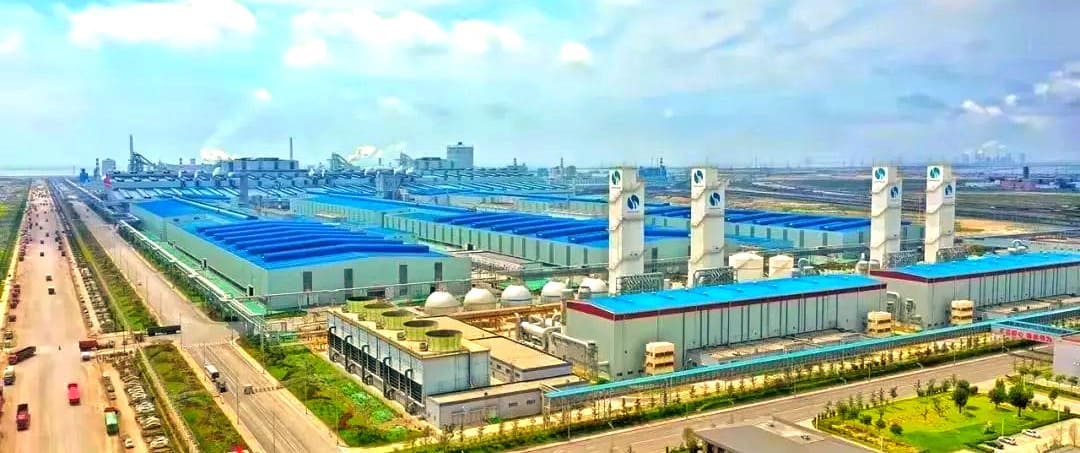
Fengnan Steel’s ironmaking project is located in the Lingang Economic Development Zone of Fengnan District, Tangshan (Hebei), invested and constructed by Hebei Zongheng Group Fengnan Steel Co., Ltd. In this project, Yingbo Electric provided plant-wide reactive power compensation equipment supporting Blast Furnaces No. 1–No. 4—a scope that requires not only capacity, but stable coordination across multiple major production units.
Steel plants do not behave like “steady industrial loads.” They are dominated by impact loads whose reactive demand changes rapidly and repeatedly. The operational requirement is clear: reactive power must be corrected smoothly, continuously, and fast, otherwise voltage stability, equipment protection, and energy cost control all suffer.
Steel production creates some of the most demanding electrical conditions in industry. Major loads such as electric arc furnaces (EAFs), ladle furnaces (LFs), and rolling mills draw large reactive power with rapid fluctuation in both magnitude and rate—often driving low power factor, voltage instability, and operating inefficiency.
When reactive power is not controlled in time, the consequences are practical and costly:
-
Voltage stability risk: When reactive demand swings quickly, voltage can sag and recover repeatedly. That increases the chance of nuisance alarms, protection actions, and unstable operation of downstream drives and control systems.
-
Capacity and loss penalties: Low power factor and uncontrolled reactive flow increase current on the same active power output, which drives extra losses and consumes transformer/cable capacity that should be serving production.
-
Process continuity and equipment stress: Impact loads create repeated electrical “shocks.” Over time, unstable reactive compensation contributes to overheating, frequent switching stress, and higher maintenance workload.
A key complexity in this plant-wide scope is that different process areas stress the network in different ways:
-
EAF and LF impact loads typically introduce three-phase imbalance and high low-order harmonic content, while also producing fast reactive swings that demand immediate correction.
-
Rolling mill impact loads are often closer to three-phase balanced, but can present higher-order harmonic content and strong dynamic reactive demand during rolling cycles.
That mix matters: it means the plant needs reactive power support that is fast enough for impact events, while also providing stable, automatic bulk compensation to keep the overall system operating at a healthy power factor.
What we delivered
A coordinated high-voltage compensation architecture built for impact-load behavior
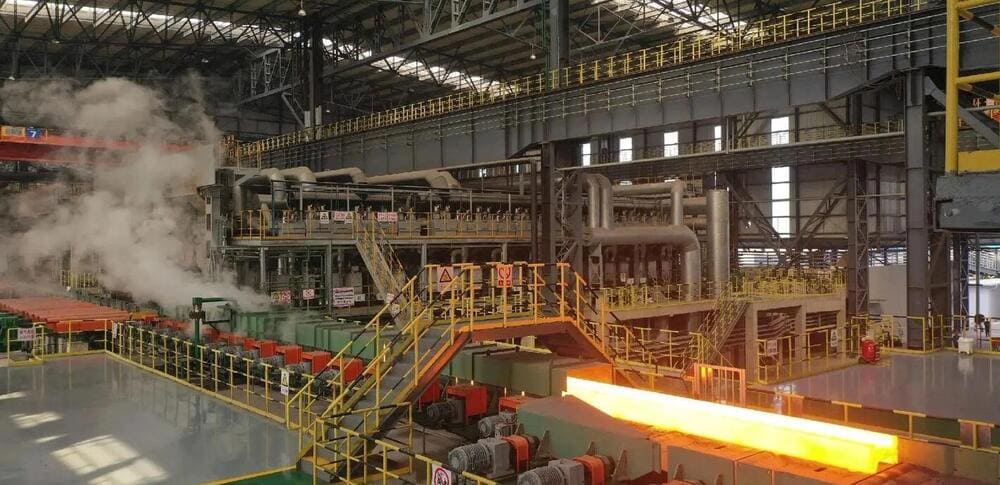
This project adopted a hybrid plant-level solution combining INPBBZ automatic reactive power compensation units with INPSVG high-voltage static var generators, providing a total compensation capacity of 38,600 kvar.
Rather than treating all loads the same, the solution architecture is designed to match how steel plants actually behave:
-
Fast dynamic reactive support where fluctuations are sharpest (INPSVG): Responds rapidly to reactive power swings from impact loads, helping stabilize voltage and reduce the operational disturbance caused by fast-changing production states.
-
Stable bulk compensation for plant-wide power factor control (INPBBZ): Provides automatic, continuous reactive power regulation at the system level, supporting an improved power factor baseline across the network.
-
Smooth, continuous, rapid reactive regulation: The coordinated control approach enables reactive power to be regulated in a way that is operationally “quiet”—supporting stable plant operation rather than chasing problems after they appear.
-
Plant-wide consistency across BF No.1–No.4: Standardized deployment helps ensure that improvements are not limited to a single electrical room, but support system performance across the ironmaking scope.
Results and Benefits
With 38,600 kvar of combined compensation capacity deployed through INPBBZ + INPSVG, the project established a more controlled reactive power baseline for plant-wide operation supporting Blast Furnaces No. 1–No. 4. In practical terms, the operator gains more stable voltage behavior under impact load cycles, improved power factor performance, reduced reactive circulation that wastes system capacity, and a smoother electrical operating environment that lowers long-term maintenance pressure. The result is a power system that better supports steel production’s real requirement: stable, continuous operation under highly dynamic load conditions.
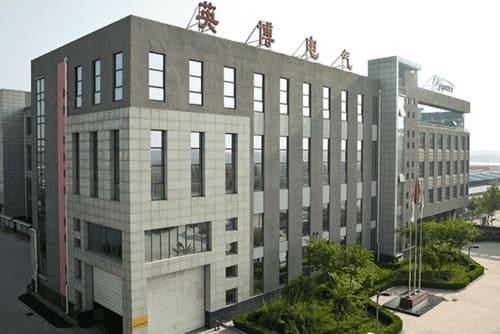
Yout Trusted Power Quality Solutions Provider from China
Enhancing Your Efficiency with Industry-Leading Power Quality Solutions
When power quality is critical, customers look for more than a product—they look for a partner who’s done it many times before. In-Power Electric is one of China’s top three power quality solution providers, with 320+ IP rights (including 90+ invention patents and 50+ software copyrights) and participation in 50+ power quality standards. Our solutions have been deployed across industrial, commercial, infrastructure, and mission-critical environments, working alongside global brands, we help complex facilities achieve stable, compliant, and efficient power systems.

Intel Dalian's Non-Volatile Memory (NVM) ProjectPhase I Expansion

BOE Mianyang G6 AMOLED (Flexible) Production Line Project

Truly (Renshou)'s G5 TFT-LCD High-End Display Production Line Project

Xiamen Hithium Energy Storage Technology Co., Ltd

Huarui Optoelectronics LCD Panel Production Line Project

Canadian Solar (Yangzhou) Manufacturing Base
Shuangliang Silicon Materials (Baotou) Co., Ltd

Tongwei Solar Energy (Anhui) Co., Ltd
JA Solar Baotou Manufacturing Base Project

Tongren Hanergy Mobile Energy Manufacturing Base

Xinte Energy Xinjiang Polysilicon Manufacturing Base

YMTC 3D NAND Chip Manufacturing Base

CETC Monocrystalline silicon manufacturing base

China Resources Snow Beer Nanjing Manufacturing Plant Project

WUDELI Flour Mill Group Co., Ltd
Inner Mongolia Yijiahao Cheese Co., Ltd

CNPC Jichai POWER Company Limited

CNPC Soralchin Adrar Refinery
Let's talk about your project
Contact us to discuss your loads, harmonic profile, and reliability requirements. We’ll recommend a practical active filtering approach that fits your electrical system.