
Canadian Solar Monocrystalline Wafer Project
Low-Voltage Active Harmonic Filter (APF) applied to furnace-driven, harmonic-intensive production lines
- Project scale: 3GW monocrystalline wafer project
- Investment: RMB 4 billion, built in three phases
- Core electrical challenge: high harmonic load concentration from furnaces and wire-saw lines
- Solution: Low-Voltage Active Harmonic Filter (APF)
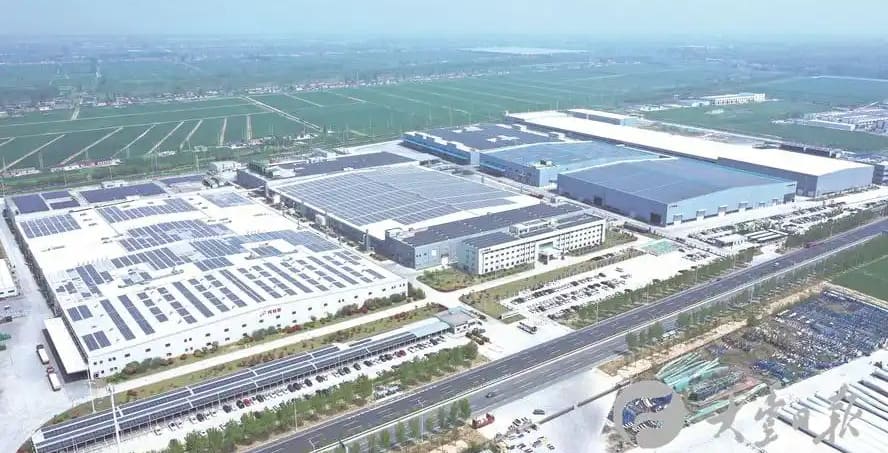
Project Context:
This is not a light industrial load, the monocrystalline silicon production is a high-value, high-energy process. The production base depends on stable power delivery because most core tools are high-power, high-duty-cycle, and sensitive to electrical disturbances that can interrupt runs and drive costly recovery. Once a furnace run is interrupted, the cost isn’t limited to electricity — it can mean lost time, unstable process control, and avoidable equipment stress.
Why Power Quality Is Mission-Critical in Supercomputing
In monocrystalline silicon manufacturing, the power system directly affects production continuity. The line relies on energy-intensive equipment — medium-frequency furnaces, DC furnaces for crystal growth, polycrystal furnaces, wire saws, and related power electronics — and those loads do not draw power in a “smooth” way.
When harmonics build up, the consequences are practical and expensive:
-
Unplanned trips and shutdowns that interrupt heating cycles and slow output ramp-up
-
Nuisance protection events that create stop-start instability on production lines
-
Higher electrical stress on transformers, cables, and switchgear, increasing maintenance pressure
-
Lower usable capacity of the power system, especially during phase expansion and peak production
In short: power quality here is not a compliance checkbox — it’s a stability foundation for yield, throughput, and predictable operating cost.
Power Quality Stress Profile
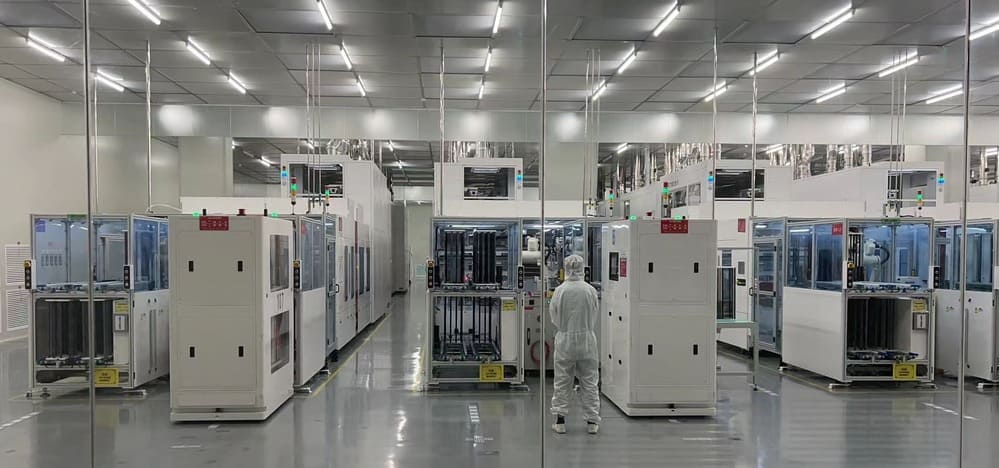
This project has a particularly demanding mix because production includes both melt heating and crystal-growth heating:
-
Medium-frequency furnaces dominate the melt/heating stage, introducing fast-changing power draw patterns.
-
DC furnaces used in the Czochralski crystal-growth process behave as nonlinear loads with persistent harmonic output.
-
When multiple furnaces operate in parallel, harmonic currents can stack on shared feeders/transformers, amplifying distortion and increasing the likelihood of protection issues.
-
Downstream equipment such as wire saws adds further converter-driven load behavior, increasing the overall distortion burden.
These loads commonly generate harmonic currents dominated by odd-order harmonics, especially the 5th, 7th, 11th, and 13th. The risk is not only the presence of harmonics—it’s their operating-stage variability: distortion can change as furnaces ramp, stabilize, and transition, which makes “static” mitigation strategies less reliable.
What’s distinctive in a 3GW, phased ramp-up project: as capacity increases by phases, harmonic sources don’t just add linearly—they can stack on shared feeders and buses, turning early-stage “manageable” distortion into later-stage operational constraints unless a scalable mitigation plan is in place.
What we delivered
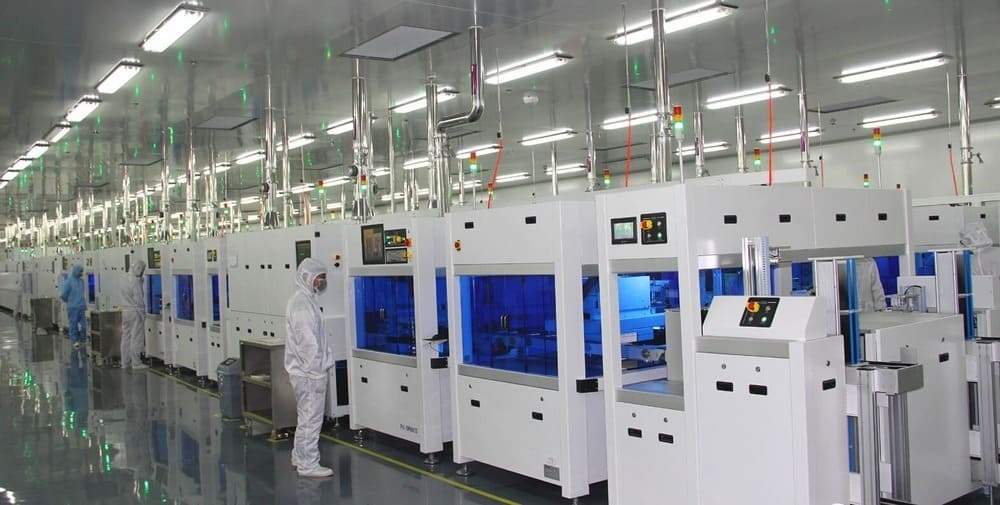
To address the production reality above, the project adopted our BLUEWAVE Active Filter as a site-ready harmonic mitigation solution.
- Dynamic harmonic mitigation under changing furnace conditions: actively compensates harmonic currents—especially the characteristic low-order odd harmonics common in rectifier- and inverter-based equipment—reducing the distortion burden on feeders and distribution equipment.
- Stay effective under changing process states: Furnace operations do not hold one steady load point, our AHF real-time compensation approach is designed to keep performance stable as loads ramp, switch states, or fluctuate across production cycles.
-
Stability-first integration at the LV system: The deployment focuses on improving the “electrical baseline” seen by critical process equipment—reducing the likelihood that distortion triggers trips, alarms, or avoidable resets.
-
Scale with phased construction and capacity ramp
As the project progresses through multiple phases, the harmonic profile and load density change. The solution strategy is built to support staged deployment and expansion rather than requiring a full redesign at every ramp.
Results and Benefits
With our active filtering applied, the facility strengthens its power quality environment where it matters most: the furnace- and processing-heavy sections of the LV distribution system. The operational value is reflected in fewer distortion-related trips and interruptions, lower stress on electrical assets, higher effective capacity utilization, and reduced routine troubleshooting and maintenance burden. Over the long run, a more stable electrical baseline supports more predictable production, better yield confidence, and lower manufacturing cost pressure—which is exactly what large-scale, phased wafer projects need as they ramp to full output.
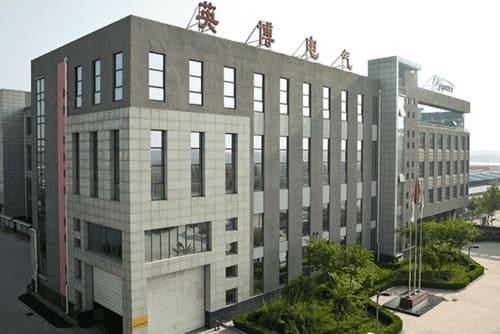
Yout Trusted Power Quality Solutions Provider from China
Enhancing Your Efficiency with Industry-Leading Power Quality Solutions
When power quality is critical, customers look for more than a product—they look for a partner who’s done it many times before. In-Power Electric is one of China’s top three power quality solution providers, with 320+ IP rights (including 90+ invention patents and 50+ software copyrights) and participation in 50+ power quality standards. Our solutions have been deployed across industrial, commercial, infrastructure, and mission-critical environments, working alongside global brands, we help complex facilities achieve stable, compliant, and efficient power systems.

Intel Dalian's Non-Volatile Memory (NVM) ProjectPhase I Expansion

BOE Mianyang G6 AMOLED (Flexible) Production Line Project

Truly (Renshou)'s G5 TFT-LCD High-End Display Production Line Project

Xiamen Hithium Energy Storage Technology Co., Ltd

Huarui Optoelectronics LCD Panel Production Line Project

Canadian Solar (Yangzhou) Manufacturing Base
Shuangliang Silicon Materials (Baotou) Co., Ltd
Tongwei Solar Energy (Anhui) Co., Ltd
JA Solar Baotou Manufacturing Base Project

Tongren Hanergy Mobile Energy Manufacturing Base

Xinte Energy Xinjiang Polysilicon Manufacturing Base

YMTC 3D NAND Chip Manufacturing Base

CETC Monocrystalline silicon manufacturing base

China Resources Snow Beer Nanjing Manufacturing Plant Project

WUDELI Flour Mill Group Co., Ltd
Inner Mongolia Yijiahao Cheese Co., Ltd

CNPC Jichai POWER Company Limited

CNPC Soralchin Adrar Refinery
Let's talk about your project
Contact us to discuss your loads, harmonic profile, and reliability requirements. We’ll recommend a practical active filtering approach that fits your electrical system.