
National Supercomputing Center in Xi’an
Power quality protection for mission-critical, ultra-high-availability computing
- Project type: National-level supercomputing center
- Computing scale: total peak ~300P, Phase I ~180P
- Facility context: advanced computing + high-speed network + liquid-cooling infrastructure
- Solution deployed: Three-level series Low-Voltage Active Harmonic Filter (APF)
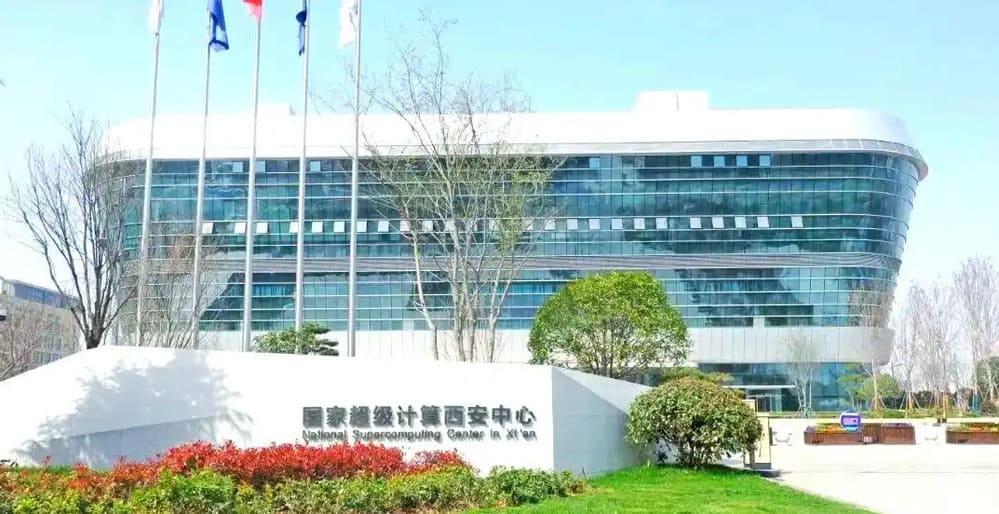
Project Context:
The National Supercomputing Center in Xi’an is a national-level computing infrastructure project designed and built in two phases. Phase I targets a world-class supercomputing capability with peak computing capacity of 180 PFLOPS, with the overall plan reaching 300 PFLOPS and large-scale storage resources as the project matures.
This type of facility is fundamentally different from conventional “industrial loads.” Supercomputing centers concentrate high-density equipment value and 24/7 service commitments into a single power system. Many critical devices in such environments are extremely expensive and operate within narrow tolerance windows; even small power disturbances can trigger abnormal events, forced recovery, or equipment damage—creating severe losses that scale far beyond the duration of the disturbance.
Why Power Quality Is Mission-Critical in Supercomputing
Supercomputing centers are designed around one non-negotiable requirement: continuous, stable operation. Unlike typical industrial loads, an HPC facility concentrates high-density electronic loads that react instantly to electrical disturbances.
In practical terms, power quality issues here don’t just create “electrical problems”—they create computing risk:
-
Unplanned stops can interrupt services and trigger recovery work across tightly coordinated systems.
-
Electrical stress accumulates quietly, shortening component life and increasing maintenance burden.
-
Downtime has an outsized cost curve in mission-critical computing: even short disturbances can cascade into long recovery windows.
This risk profile becomes even more demanding when the center runs advanced cooling and energy-efficiency architectures (including immersion/liquid-cooling approaches used in the “Qinling” platform), because stable electrical conditions are essential to keep the entire system operating in its intended performance envelope.
Power Quality Stress Profile
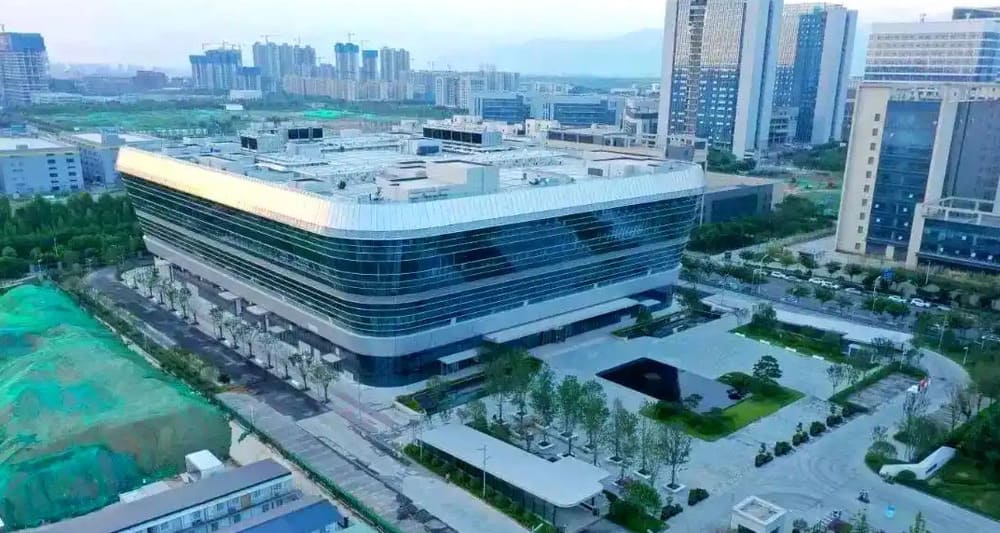
Based on what is commonly observed in supercomputing/data-center power architectures—and what is typically seen during commissioning and ramp-up—this type of facility tends to show a recognizable pattern:
-
Nonlinear-load distortion from power electronics
High-density computing power supplies, rectifier/inverter stages, and reliability power equipment can introduce harmonic currents that accumulate quickly at the low-voltage bus. -
Fast load transitions that amplify “power quality sensitivity”
Supercomputing clusters don’t load like motors; they shift rapidly with workload scheduling. That makes the electrical system more sensitive to distortion and reactive swings—especially during start/stop events, expansion phases, and partial-load operation. -
Reactive power fluctuation and voltage-quality pressure
When power factor and reactive demand move dynamically, voltage stability becomes harder to hold steady—raising the probability of alarms, derating, or protective actions in a facility engineered for 24/7 continuity. -
Higher consequence of “small” problems
In mission-critical environments, even minor instability can translate into measurable operational disruption—because the tolerance for interruptions is extremely low.
What makes the Xi’an project distinct is the combination of national-level service positioning, phased commissioning and expansion, and dedicated high-reliability power infrastructure—meaning the electrical system must stay stable not only at “steady state,” but also through ramp-ups, tuning, and future growth.
What we delivered
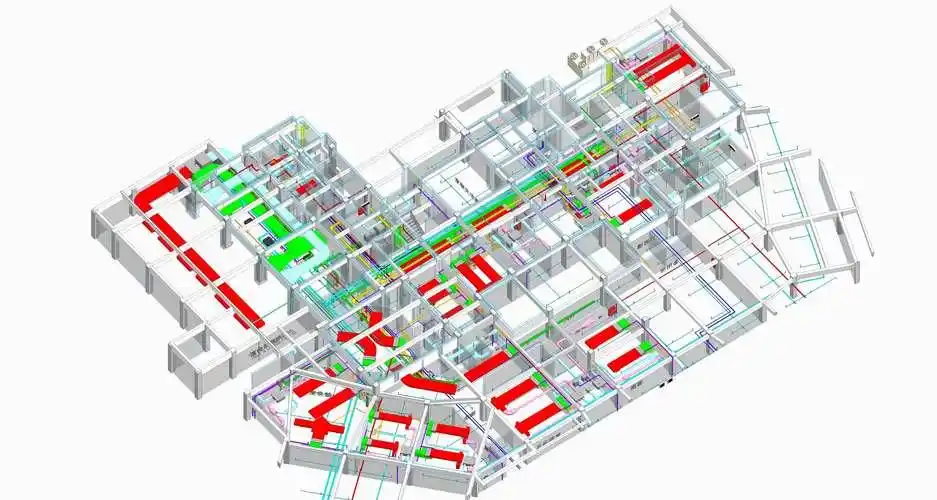
To match the operating logic of a supercomputing center, the delivered solution was built around one goal: keep the grid current clean and predictable under continuously changing load conditions.
The BLUEWAVE three-level series APF works by measuring current through external CTs, extracting harmonic and reactive components in the digital control unit, and generating compensation current in real time—so the upstream system sees primarily fundamental current even as load composition shifts.
In practical terms, the solution was configured to deliver:
-
Continuous harmonic suppression to reduce distortion stress on transformers, feeders, and low-voltage distribution equipment.
-
Fast dynamic response so short-duration load changes don’t become recurring alarms or stability events.
-
Reactive power management to keep the operating power factor within the site’s control strategy, supporting stable system behavior as operating states change.
-
Engineering-fit deployment at the distribution level that matters, with CT installation flexibility and settings that align with on-site operating priorities.
(Note: “three-level” topology is used in critical facilities to achieve smoother output behavior and improved efficiency/thermal performance at the power stage—supporting stable long-duration operation.)
Results and Benefits
With the APF solution in place, the operator gains a more stable electrical baseline that supports continuous service delivery: fewer power-quality-driven interruptions, reduced electrical stress across the distribution chain, and a lower probability that distortion or reactive fluctuation becomes an operational incident. Over time, that translates into what supercomputing operators value most—more predictable uptime, less disruptive troubleshooting, and stronger confidence that the power system will keep pace with commissioning, expansion, and high-intensity workloads.

Power Quality Projects for Cloud Data Centers
Built for high-density racks, constant load shifts, and 24/7 availability.
Cloud data centers run mission-critical compute where even brief electrical disturbances can trigger alarms, derating, or expensive recovery events. Across multiple China Telecom–style facilities, we’ve delivered power quality solutions that help keep critical loads stable, reduce power-quality-driven alarms and disruptions, and protect long-term electrical health. Below is a selection of data center projects where our solutions were implemented and validated in real operating environments.
- Huawei Cloud Ulaanqab Data Center
- Huawei Guian Global Cloud Data Center
- Huawei Langfang Cloud Data Center
- Huawei Zhangye Cloud Data Center
- China Mobile Cloud Computing Center
- China Mobile (Hohhot) Data Center
- China Unicom Intelligent Cloud Data Center,
- China National Computer Network Emergency Response Technical Team / Coordination Center
- GDS Data Centers (GDS Holdings Limited)
- JD.com Data Center
- CITIC Bank Data Center
- China Transport Telecommunication & Information Center
- Alibaba (Zhangbei-Miaotan) Data Center
- China Telecom Xinjiang Cloud Data Center
- ZITrust Cloud Data Center
- Tencent Cloud Data Center
- Alibaba Cloud Data Center
- Kuaishou Data Centers
Let's talk about your project
Contact us to discuss your loads, harmonic profile, and reliability requirements. We’ll recommend a practical active filtering approach that fits your electrical system.