
Power Quality Protection for National Film Festival Venue
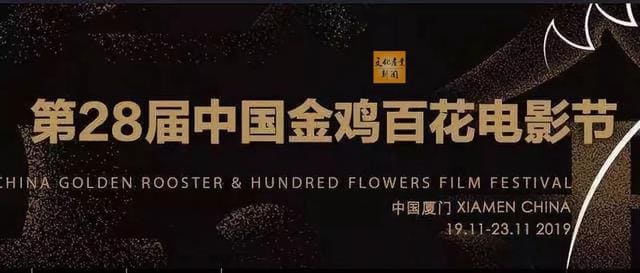
Harmonic mitigation for the 28th Golden Rooster & Hundred Flowers Film Festival at Xiamen ICCE
- Industry: Event venues / large-scale performances
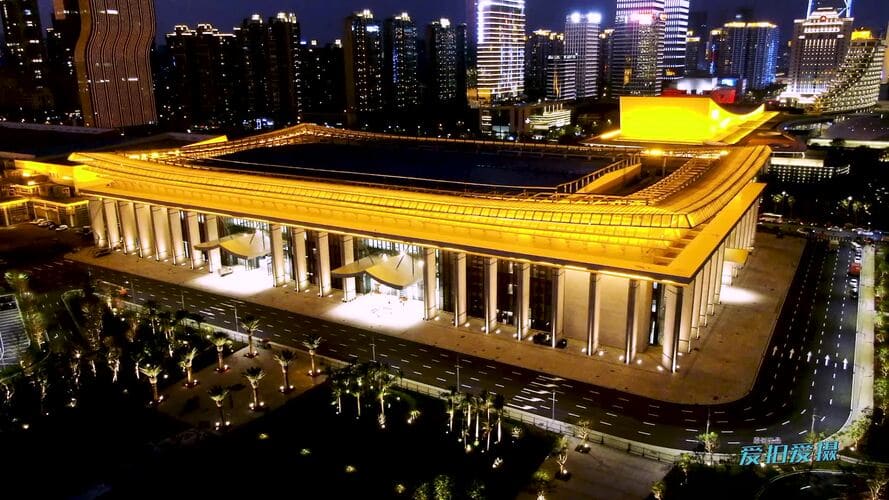
- Venue: Xiamen International Convention & Exhibition Center, Phase IV
- Core loads: Stage lighting + sound + LED screens + stage machinery + HVAC
- Solution: BLUEWAVE Active Power Filter (APF)
Project Context:
The 28th Golden Rooster & Hundred Flowers Film Festival was hosted at Phase IV of the Xiamen International Convention and Exhibition Center, a large, multi-purpose performance venue designed to support integrated stage lighting, professional audio, and stage machinery control systems. During major film festival events, the power system is pushed into a “broadcast-grade” operating mode: lighting cues change rapidly, LED screens run at high brightness, audio systems operate with strict noise tolerance, and stage machinery must respond precisely—often under tight schedules with little margin for electrical instability
At the same time, this is not a venue used once a year. It supports frequent performances and year-round operations, meaning power-quality risks affect not only headline events but also daily reliability and maintenance costs.
Why power quality matters here — and what was at stake
For a film festival venue, power quality is not an abstract engineering metric. It directly determines whether a live event remains flawless. During large-scale performances, nonlinear loads rise sharply and change constantly. If harmonics and distortion are left unmanaged, operators face real and visible consequences:
-
Show-quality risk: Distorted power can degrade audio performance and affect LED/video stability, reducing clarity and creating unwanted artifacts.
-
Control-system reliability risk: Stage machinery and communications/control networks become more vulnerable to interference and misoperation—raising the chance of stage equipment faults and performance losses.
-
Asset and safety risk: Harmonics increase electrical stress and heat in cables and equipment, accelerating aging and, in severe cases, raising the risk of electrical fire and safety incidents.
-
Operational cost risk: Instability drives repeat troubleshooting, emergency maintenance, and reduced capacity margin—exactly what venues cannot afford during major events.
In short: for a national-level festival, power quality becomes reputation protection.
A film festival venue shares harmonic characteristics with sports stadiums—large LED screens, intensive lighting, and high-power audio—but it also has its own operating pattern:
-
Lighting is cue-driven, not steady-load
Stage lighting and dimming systems often change in steps and waves throughout rehearsals and live show moments. That means distortion is not “constant”—it surges with scene transitions. -
LED walls and display systems are harmonic-dense
Large LED display systems rely on many switching power supplies. Their combined effect can introduce heavy harmonic currents, and certain harmonic components can accumulate on the neutral—adding heating and capacity stress. -
Audio and control systems demand clean power
Professional sound and signal/control networks are sensitive environments. A venue may tolerate minor distortion in a warehouse; it cannot tolerate it in a live broadcast performance space. -
Multiple systems share the same distribution network under time pressure
Lighting, LED, HVAC, and stage machinery can peak together during show windows. When many nonlinear loads share upstream feeders, harmonic currents superimpose and amplify system distortion.
What we delivered
The objective wasn’t simply to “reduce harmonics.” It was to build a power environment that stays stable during the exact moments when the venue cannot fail. Our BLUEWAVE Active Power Filter (APF) was deployed to suppress harmonic pollution and improve waveform quality across the distribution network. In practical terms, this delivered:
-
System-level harmonic suppression: Reduced harmonic content introduced by lighting control, LED display power supplies, and other nonlinear loads so distortion doesn’t accumulate across shared feeders.
-
Cleaner supply for performance-critical loads: Improved voltage and current waveform quality to support stable operation of audio, video/LED, and stage control systems during cue-driven show conditions.
-
Released capacity margin and reduced stress: Lower distortion helps reduce unnecessary heating and stress on cables and equipment, improving reliability and extending service life.
-
Safer distribution baseline for frequent events: By reducing power-quality hazards, the venue strengthens day-to-day operational reliability—not only during one flagship festival.
Importantly, the solution was selected to support a venue reality: load patterns change minute by minute, and the power system must remain predictable under those changes.
Results and Benefits
After deploying BLUEWAVE APF, harmonic pollution in the system was effectively suppressed and waveform distortion was significantly improved. For the venue operator, the value is straightforward: higher event reliability, cleaner power for performance-critical systems, reduced failure risk in stage machinery and control networks, improved safety margin, and lower operational friction during high-stakes shows. It also improves long-term asset health by reducing stress that accelerates equipment aging—helping the venue run more confidently across repeated events throughout the year.
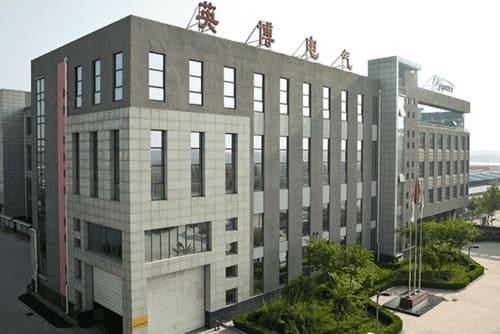
Yout Trusted Power Quality Solutions Provider from China
Enhancing Your Efficiency with Industry-Leading Power Quality Solutions
When power quality is critical, customers look for more than a product—they look for a partner who’s done it many times before. In-Power Electric is one of China’s top three power quality solution providers, with 320+ IP rights (including 90+ invention patents and 50+ software copyrights) and participation in 50+ power quality standards. Our solutions have been deployed across industrial, commercial, infrastructure, and mission-critical environments, working alongside global brands, we help complex facilities achieve stable, compliant, and efficient power systems.

Intel Dalian's Non-Volatile Memory (NVM) ProjectPhase I Expansion

BOE Mianyang G6 AMOLED (Flexible) Production Line Project

Truly (Renshou)'s G5 TFT-LCD High-End Display Production Line Project

Xiamen Hithium Energy Storage Technology Co., Ltd

Huarui Optoelectronics LCD Panel Production Line Project

Canadian Solar (Yangzhou) Manufacturing Base
Shuangliang Silicon Materials (Baotou) Co., Ltd
Tongwei Solar Energy (Anhui) Co., Ltd
JA Solar Baotou Manufacturing Base Project

Tongren Hanergy Mobile Energy Manufacturing Base

Xinte Energy Xinjiang Polysilicon Manufacturing Base

YMTC 3D NAND Chip Manufacturing Base

CETC Monocrystalline silicon manufacturing base

China Resources Snow Beer Nanjing Manufacturing Plant Project

WUDELI Flour Mill Group Co., Ltd
Inner Mongolia Yijiahao Cheese Co., Ltd

CNPC Jichai POWER Company Limited

CNPC Soralchin Adrar Refinery
Let's talk about your project
Contact us to discuss your loads, harmonic profile, and reliability requirements. We’ll recommend a practical active filtering approach that fits your electrical system.