
Power Quality Solutions for Gansu Maternal & Child Health Hospital
Harmonic mitigation to protect MRI/CT imaging stability and critical patient-care equipment
- Facility type: National-level public tertiary Class A maternal & child hospital
- Campus scale: 116,900 m² in service; operating 1,500 beds
- Project focus: Harmonic mitigation to protect critical medical equipment and improve electrical stability
- Delivered: Low-Voltage Active Harmonic Filter (APF) solution

Project Context:
Established in 1942, Gansu Maternal and Child Health Hospital is a non-profit, national-level public tertiary Class A institution. Since 2012, major buildings have entered service in phases, expanding the hospital to 116,900 m² of operational floor area and scaling capacity toward 1,500 beds.
As service standards rise, hospitals introduce more advanced electrical loads, such as MRI systems, CT scanners, and high-frequency surgical equipment, along with extensive monitoring and clinical IT systems. These devices are accurate and powerful—but also electrically sensitive. When power quality deteriorates, the consequences go far beyond energy waste: it can trigger equipment faults, disrupt clinical workflows, and in severe cases create safety exposure.
Why power quality matters in hospitals
Hospitals are a special kind of power system: they combine heavy nonlinear loads with highly sensitive electronics.
On one side, common hospital loads such as advanced electronic medical devices, computer systems, HVAC ventilation equipment with variable-frequency drives, lighting, and diode surgical lights are recognized harmonic sources. On the other side, many major medical devices are computer-controlled and highly sensitive to voltage drops; voltage sags are a known reason equipment can’t operate normally and can also lead to errors or hardware issues.
For a hospital operator, the real cost of poor power quality isn’t “THD”—it’s what happens next:
-
Interrupted clinical flow: imaging delays, repeated exams, rescheduled procedures, and bottlenecks in peak hours
-
High-value asset exposure: advanced equipment is expensive, and unstable operating conditions shorten service life and raise failure probability
-
Reliability pressure on engineering teams: recurring alarms, nuisance events, and harder fault isolation in a busy campus
-
Patient-facing impact: when diagnostics and treatment schedules slip, the whole patient experience suffers—especially in maternal and child care where time and precision matter
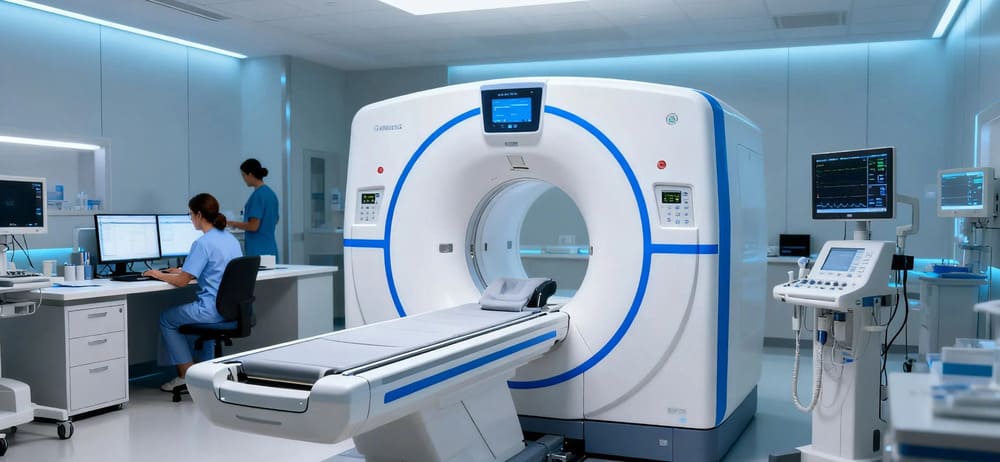
This hospital environment showed a set of “classic” healthcare power-quality pressures—where technical symptoms translate into operational risk:
-
Excess harmonics and electrical “noise” created by nonlinear loads, with potential to pollute the network, stress equipment, and interfere with safe use of medical devices.
-
Three-phase imbalance and elevated neutral current risk in a mixed medical + building-load network, increasing heat and reliability pressure in the distribution system.
- Voltage sensitivity of key equipment, where even short dips can trigger abnormal operation, interruptions, or errors in electronically controlled medical systems.
In practical terms, these issues don’t just “look bad on a meter.” They show up as unstable equipment behavior (image quality inconsistency, data anomalies, unexpected faults), greater troubleshooting burden, and heightened protection risk around high-value medical assets.
What we delivered
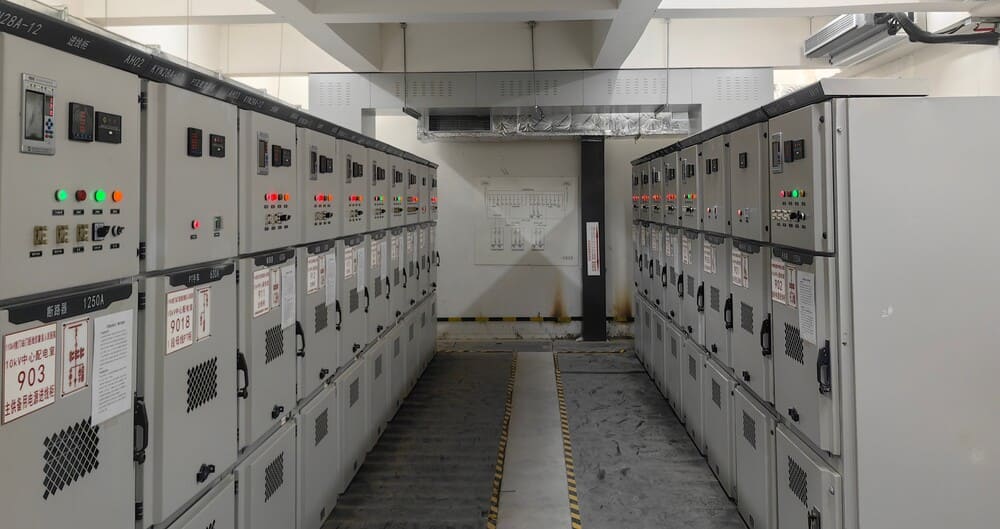
We delivered a solution centered on one priority: protect high-value, high-sensitivity medical equipment from harmonic interference. Our Low-Voltage AHF/APF functions like an active shield on the hospital power bus. It continuously tracks distortion levels and immediately injects compensation current to neutralize harmonics before they can propagate through feeders and affect critical loads.
This approach is especially effective in hospitals because harmonic sources are distributed and unpredictable—diagnostic equipment, electronic power supplies, building systems, and other nonlinear loads come on and off constantly. The AHF responds to these changes automatically, reducing the chance that harmonic distortion becomes image artifacts, data anomalies, nuisance trips, or abnormal equipment behavior that interrupts clinical work.
Results and Benefits
After implementation, the hospital gained a more stable electrical baseline for critical equipment—especially for devices that are easily affected by distortion and power-quality events. We didn’t pursue “pretty waveforms” for their own sake; we aimed for outcomes the operator actually feels: fewer recurring disturbances, lower stress on distribution assets, and smoother day-to-day performance of sensitive systems.
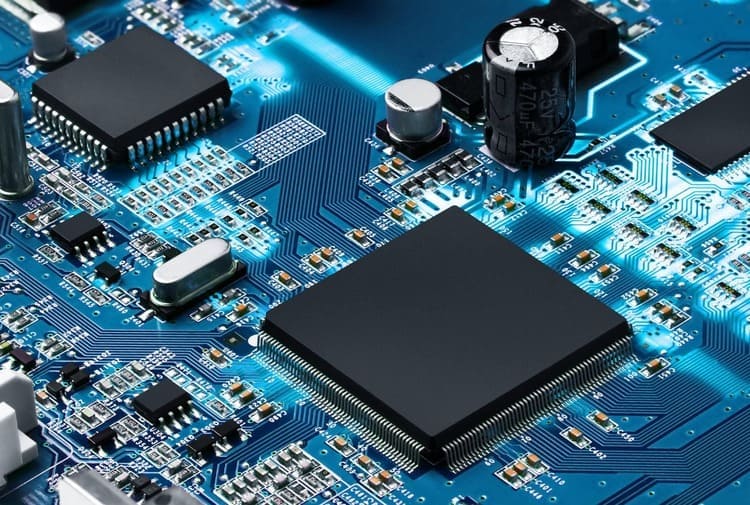
Trusted Power Quality Support for Hospitals
Harmonics, reactive power, and voltage stability—managed for real hospital operating conditions.
Hospital electrical networks carry zero tolerance for instability. From imaging and lab equipment to ventilation, elevators, HVAC, and backup systems, power quality directly affects operational continuity and patient safety. Below is a selection of our hospital power-quality projects—showing how we help facilities reduce electrical risk, improve reliability, and keep critical systems running smoothly.
Selected projects list:
-
Operating Rooms & ICU: harmonic control and reactive power stabilization
-
Medical Imaging Areas (MRI/CT): distortion mitigation for sensitive loads
-
Central Plant & HVAC: variable-speed drive harmonic management
-
UPS & Critical Power Rooms: system-level power quality optimization
-
Expansion & Retrofit Projects: power quality upgrade during phased construction
Partner hospitals

Gansu Maternal & Child Health Hospital
Xinzheng Public People's Hospital

The First People's Hospital of Neijiang

First Affiliated Hospital of China Medical University

Hebei Yanda Hospital
Let's talk about your project
Contact us to discuss your loads, harmonic profile, and reliability requirements. We’ll recommend a practical active filtering approach that fits your electrical system.